
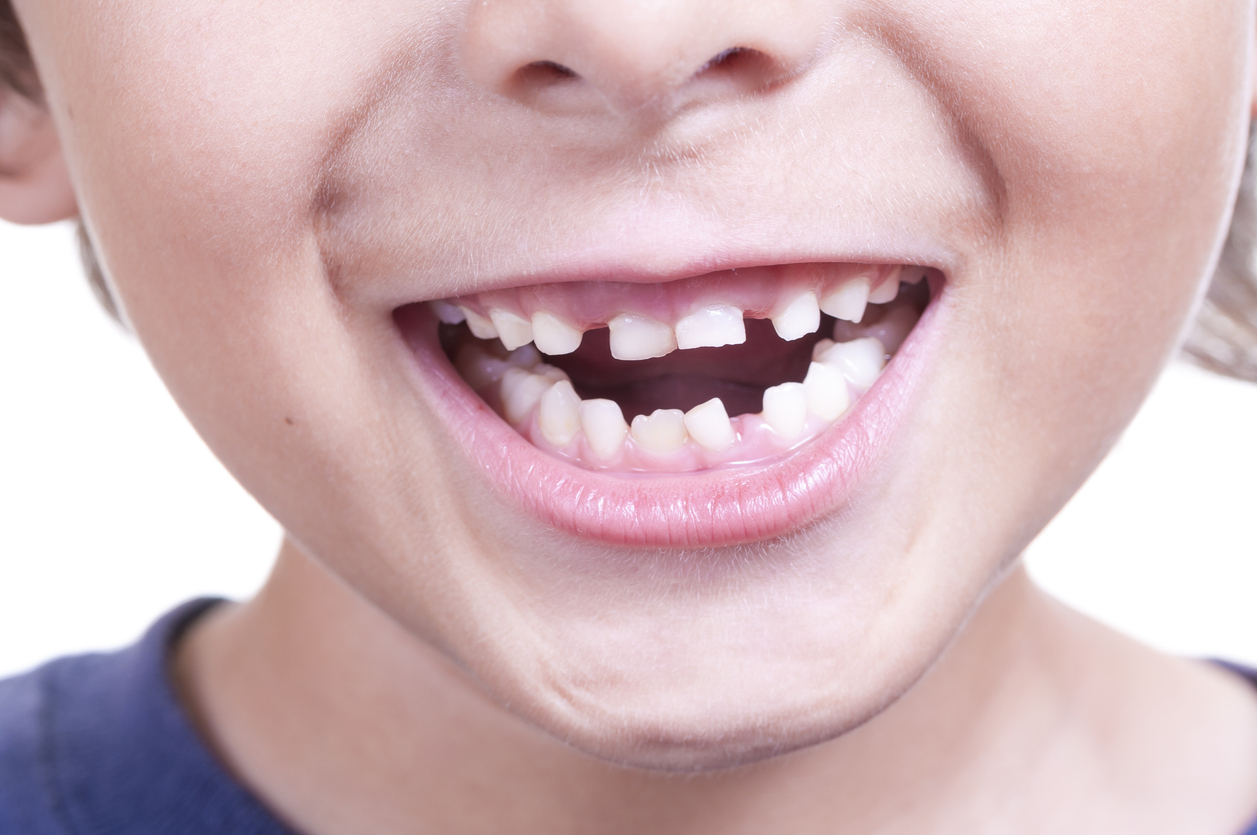
| Quick Answer: Most children get full braces between ages 11 and 14, after most permanent teeth have come in. The American Association of Orthodontists recommends an initial orthodontic evaluation by age 7 — not because most 7-year-olds need braces, but because some kids benefit from early (Phase 1) treatment for specific issues like severe crowding, crossbite, or jaw alignment. The right age depends on the issue, not the calendar. |
If you’ve been wondering when your child should be evaluated for braces — or whether something you’re noticing now warrants a call — you’re asking the right question at the right time. At Jensen Orthodontics in Las Cruces, we evaluate kids of all ages and the answer to “when?” is rarely a single number. Most kids end up in full braces between ages 11 and 14, but some benefit from earlier intervention.
Here’s the timeline and the signs to watch for at each stage.
The American Association of Orthodontists Recommendation
The AAO recommends every child have an initial orthodontic evaluation by age 7. This isn’t a recommendation that every 7-year-old gets braces — most don’t. It’s a recommendation that an orthodontist look at the way the teeth and jaws are developing and flag anything that benefits from early treatment.
By age 7, most children have:
- A mix of baby and permanent teeth (“mixed dentition”)
- Permanent first molars in place
- Permanent front teeth (incisors) erupting
That combination gives an orthodontist enough to evaluate jaw growth, bite alignment, crowding patterns, and any developmental concerns.
Phase 1 vs. Phase 2: When Each One Happens
Phase 1 (Interceptive Treatment) — Ages 7–10
- Addresses specific issues while baby teeth are still present
- Common reasons: severe crowding, crossbite, narrow palate, jaw alignment, thumb-sucking damage, severe overbite
- Treatment typically lasts 6–12 months
- Uses limited braces or specialized appliances (palatal expanders, partial brackets)
- Followed by a “resting” phase before Phase 2
Phase 2 (Comprehensive Treatment) — Ages 11–14
- Full-mouth braces or aligners after most permanent teeth are in
- Addresses overall alignment and bite
- Typical treatment time: 18–24 months
Most kids only need Phase 2. Phase 1 is recommended only when there’s a clear early-treatment benefit — about 10–20% of kids fit this category.
Signs Your Child Needs an Orthodontic Evaluation
Visual signs to watch for:
- Crowded or overlapping teeth
- Visible gaps between teeth
- Teeth that protrude or stick out
- Crossbite (some upper teeth bite inside the lower teeth)
- Underbite (lower jaw protrudes past upper)
- Open bite (front teeth don’t touch when biting down)
- Mouth breathing or chronic snoring
- Jaw clicking or popping
- Teeth that don’t meet evenly when biting
Behavioral signs:
- Difficulty chewing certain foods
- Biting their cheek or tongue accidentally
- Persistent thumb-sucking past age 5
- Speech issues that don’t resolve with speech therapy alone
If you notice any of these by age 7, schedule an evaluation. We can usually tell within a 30-minute consultation whether your child needs treatment now, in a few years, or not at all.
Habits That Cause Orthodontic Issues
- Prolonged thumb-sucking or pacifier use past age 4. Can cause an open bite or narrow palate.
- Tongue thrusting (pushing the tongue against the front teeth when swallowing). Causes open bite over time.
- Mouth breathing from chronic congestion or enlarged adenoids. Affects facial development.
- Severe early loss of baby teeth from decay or trauma. Allows neighboring teeth to drift, creating crowding for the permanent teeth.
Catching these early often means simpler treatment.
When Adults Get Braces
You’re never too old. Plenty of adults — including many parents who bring kids in for consultations — eventually get treatment themselves. Modern aligners (like Invisalign®) make adult treatment more discreet than the metal braces of decades past.
That said, the easiest, fastest, and most effective time to address most orthodontic issues is during the active growth years (ages 7–14), when the jaw is still forming.
The Free Consultation Process
Every kid’s orthodontic journey starts with a comprehensive evaluation. Here’s what happens at Jensen Orthodontics:
- Initial 30-minute consultation (always free)
- Complete dental and skeletal evaluation
- Photos and digital scan
- X-rays if needed
- Recommendation: treat now, monitor, or no treatment needed
- If treatment is recommended: clear timeline, cost estimate, and payment plan options
If your child doesn’t need treatment yet, we’ll tell you. We monitor kids who aren’t ready for free during the “watching and waiting” years.
Visit Las Cruces Braces
If your child is approaching age 7, has visible alignment issues, or has been recommended for an evaluation by your pediatric dentist, schedule a free consultation. Jensen Orthodontics has been Las Cruces’s home for orthodontic care for years — we treat kids, teens, and adults across the whole family. Book your appointment online or by phone.
Frequently Asked Questions
What’s the best age for kids to get braces?
Most children get full (Phase 2) braces between ages 11 and 14, after most permanent teeth have come in. Some kids benefit from earlier (Phase 1) treatment between ages 7 and 10 for specific issues like severe crowding or crossbite. The American Association of Orthodontists recommends an initial evaluation by age 7.
Why does the AAO recommend an orthodontic visit by age 7?
By age 7, most children have a mix of baby and permanent teeth, plus their first permanent molars and front teeth in place. That gives an orthodontist enough to evaluate jaw growth, bite alignment, and crowding patterns. Most 7-year-olds don’t need treatment — but the small percentage who benefit from early intervention can be identified at this age.
Can a 7-year-old get braces?
Yes — but it’s uncommon. Phase 1 (interceptive) treatment for kids ages 7–10 is recommended only when there’s a clear clinical benefit, like severe crowding, crossbite, narrow palate, or jaw alignment issues. About 10–20% of kids fit this category. Most kids only need treatment later, around ages 11–14.
Are braces less effective for older teens?
No. Teens through about age 18 still have active jaw growth and respond well to orthodontic treatment. After age 18, treatment still works but takes slightly longer and may have more limitations. The most efficient window is generally ages 11–14, when most permanent teeth are in but the jaw is still actively growing.
What if my child needs braces but we can’t afford them now?
Most orthodontic offices offer monthly payment plans. HSA/FSA accounts cover orthodontic treatment. Insurance typically covers a portion. Some practices offer down-payment-free plans or sibling discounts. We’d rather help families find a way to start treatment than have them delay until problems get worse.
How do I know if my child needs braces?
Visible signs: crowded or overlapping teeth, gaps, protruding teeth, crossbite, underbite, open bite. Behavioral signs: difficulty chewing, accidental cheek/tongue biting, prolonged thumb-sucking, speech issues. Schedule a free evaluation by age 7 — we can tell you whether treatment is needed now, in a few years, or not at all.
|
Wondering if your child is ready for braces? We truly care about your child’s health and happiness. Reach out to get your child’s free consultation scheduled. We can’t wait to see you. Las Cruces Braces │ Jensen Orthodontics, Las Cruces, NM │ Free Consultation → |